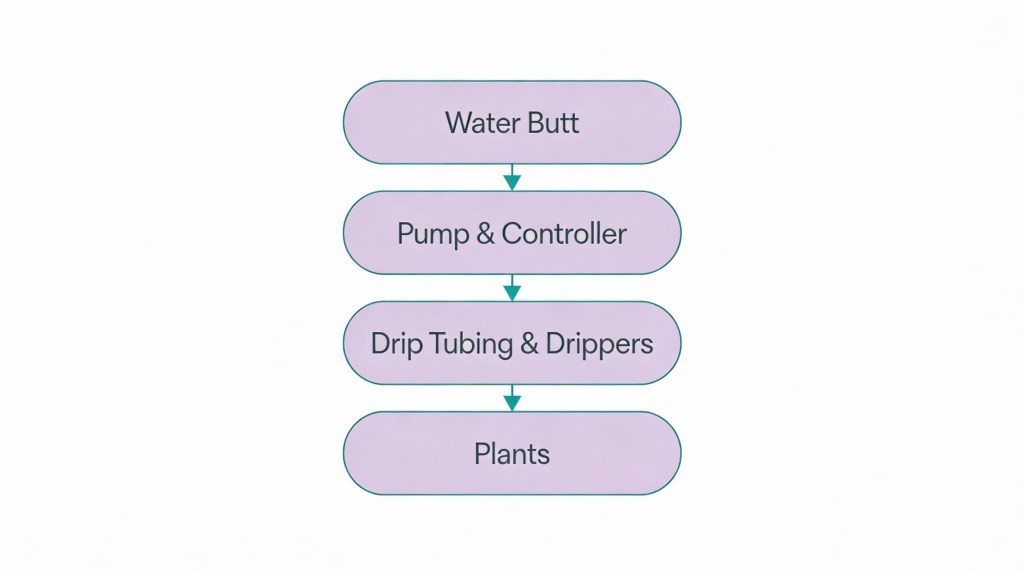
Setting up a drip irrigation system from a water butt can be very simple, low-effort, and perfect for small spaces. Think of it as: big butt, quiet solar pump, press a few buttons, and your plants get on with growing.
1. Pick and position your water butt
- Choose the biggest butt your space can handle; more litres means more days of automatic watering with no refills.
- A larger butt keeps things more stable because drip systems can use tens of litres per hour on hot days.
- Pop it on a sturdy stand so the outlet is higher than your pots or beds; this improves flow and makes connecting pipes and timers easy.
2. Add a quiet, solar-powered brain
- Use a solar-powered pump and controller so you do not need mains power or complicated wiring.
- Look for kits described as low-noise or quiet-running so the pump just hums softly in the background or is barely noticeable.
- Fix the solar panel in a sunny spot (balcony rail, wall, shed roof), plug it into the controller, and that is your power sorted.
3. Connect butt → pipe → drippers
- Clip a simple connector onto the butt tap, then push on your main irrigation pipe; most kits have push-fit parts that just click together.
- Run the main pipe around your balcony, patio, or beds, then use the supplied small tubes to reach each pot or planter.
- Keep runs fairly short and tidy, looping the pipe where you need it; the kit does most of the work and you simply press the pieces together.
4. Size your setup to your butt (bigger is better)
- More plants and more drippers mean more water per hour, so a bigger butt buys you more “set and forget” days.
- For a cluster of containers, a 200–300 litre butt gives you a generous buffer so you are not constantly topping it up.
- Once it is full and connected, the system quietly draws what it needs while you get on with life.
5. Quiet water-level awareness (no annoying sounds)
- Some kits beep when the butt runs low, which is the last thing you need on a peaceful balcony.
- Choose a controller with lights or screen messages instead of loud alarms, or one where you can switch off sound.
- If there is a small beep you cannot disable, you can mount the controller in a little weather-safe box or cupboard to soften the sound while it still works perfectly.
6. Set it and forget it
- Use the simple timer options on your controller: for example, water once in the morning and once in the evening, or every few hours in very hot weather.
- After that, the system just turns itself on and off, taking water from your nice big butt and delivering it straight to the plants without you lifting a watering can.


 City Dripper
Leave a comment